Willimantic Horror
Some places remember what happened there.
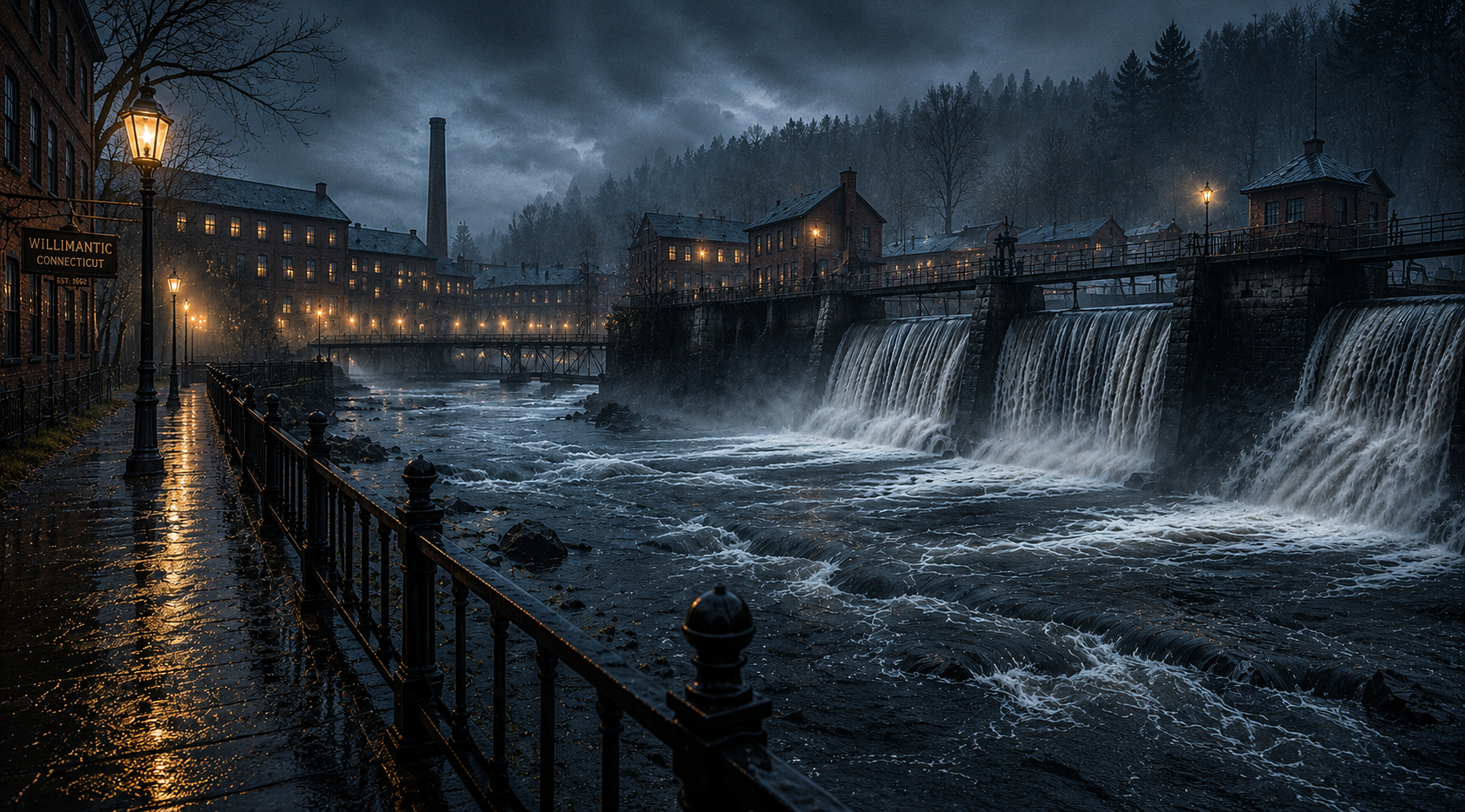
The river built the town. The mills gave it purpose. And something inside the old industrial heart of Willimantic never truly left.
A world built around atmosphere
Willimantic Horror explores fear through environment, memory, and psychological tension. The town itself becomes part of the experience:
- Old factories
- Empty bridges
- Fog-covered rivers
- Silent machinery
- Distant lights in dark windows
The horror comes from uncertainty. Not knowing what happened, what people ignored, or what still lingers inside the old structures.
What happens here
People disappear quietly. Stories repeat themselves across generations. The mills continue to decay while the town tries to move forward around them.
Most residents avoid certain places after dark. Some cannot explain why.
Others refuse to speak about the river at all.
The old mills
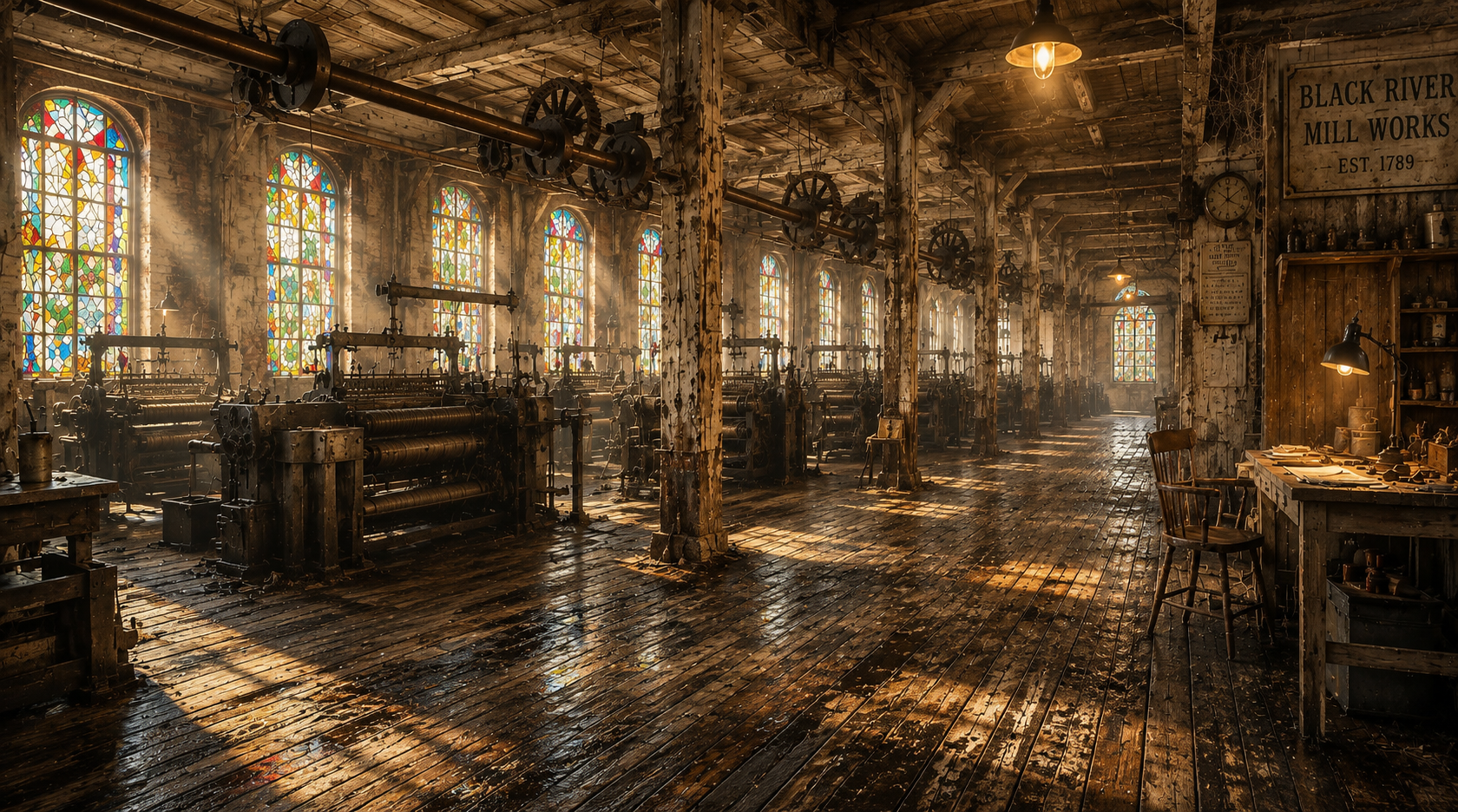
The mills once powered the entire town. Massive wooden floors carried endless rows of machines driven by shafts, rods, gears, and belts overhead.
Even now: the floors creak, machinery settles, old pipes vibrate, lights flicker unexpectedly.
The buildings feel abandoned. But never empty.
The river remembers
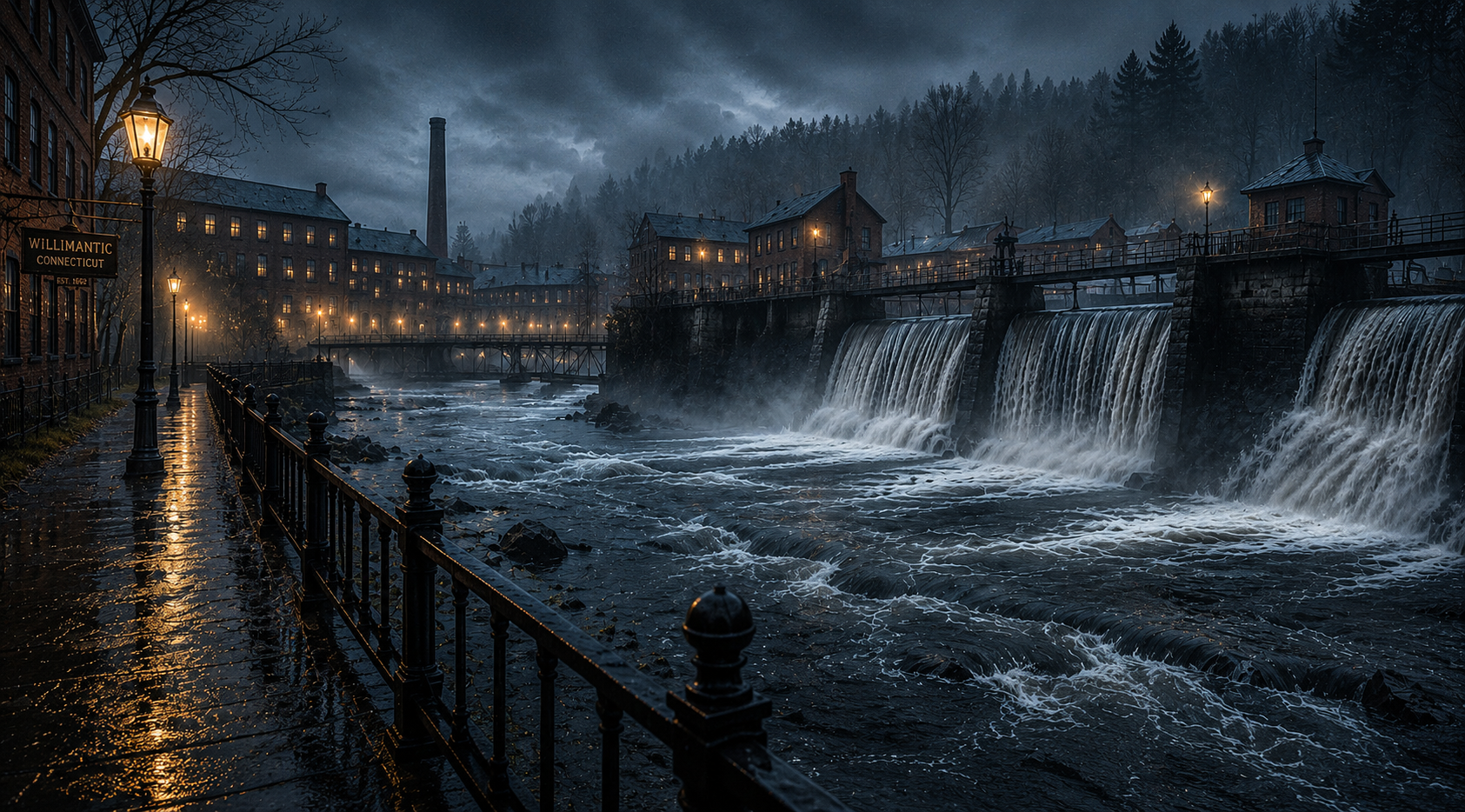
The river cuts through the town like a boundary between past and present. The dams still move water through the old industrial channels. Mist rises constantly above the spillways. The sound never fully stops.
At night, the river becomes something else: reflective, endless, watchful.
People who grew up near it learn to respect it early.
What people feel here
- Isolation
- Unease
- Suspicion
- Memory
- Dread
- Curiosity
Willimantic Horror asks what happens when places remember more than people do.
Why people stay
Despite the fear, people stay because the town still feels familiar. Families remain connected to:
- The mills
- The river
- The history
- The routines of daily life
The horror grows slowly through familiarity. The longer someone stays, the harder it becomes to tell what is normal.
The environment becomes the horror
Willimantic Horror does not rely on spectacle. It explores psychological tension, environmental storytelling, inherited fear, and emotional uncertainty.
The world asks:
- How much can a place affect the people inside it?
- What happens when fear becomes routine?
- Can environments carry emotional memory?